
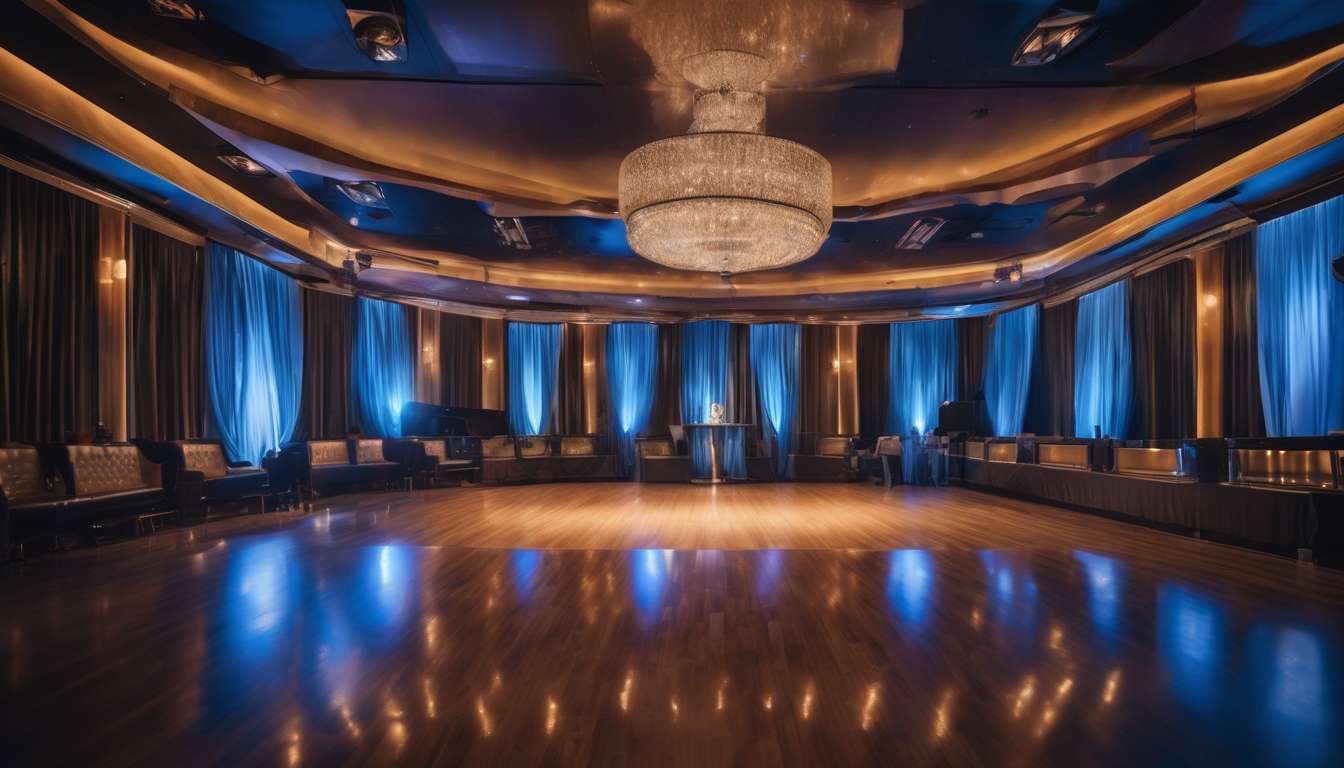
Context: Here in the wake of sweeping municipal reforms and high-profile court rulings, we track how exotic dancing venues reshape operations to comply with evolving licensing rules.
Regulatory pressures and venue responses:
- As cities tighten standards around zoning, safety, and employment practices, clubs adapt floor plans, change hours, and enhance security measures to meet inspectors’ checklists.
- New license categories and digital permitting systems force a rethink of longstanding business models and community relationships.
Areas of attention:
- Performers’ rights — how changes affect pay, contracting, and protections.
- Management practices — how owners implement compliance while maintaining operations.
- Neighborhood dynamics — impacts on local commerce, safety perceptions, and land use.
Methodology:
- Drawing on recent legislative updates.
- Conducting interviews with venue owners and dancers.
- Performing comparative analyses across jurisdictions.
Purpose: Our goal is to map the strategies venues use to remain viable while conforming to modern expectations and to illuminate practical responses and policy implications that affect performers, patrons, and the broader urban fabric.
Regulatory Landscape Overview
We’ll begin by outlining the current regulatory framework that governs exotic dancing venues and recent shifts affecting licensing and compliance.
We know many of us want clear, fair rules that let venues thrive while keeping performers safe, so we’ll map the essentials:
-
Adult entertainment licensing processes
- Licensing timelines, fees, and background-check requirements vary by jurisdiction.
- Consistent standards would reduce uncertainty for venue operators and performers.
-
Common performer safety regulations
- Practical standards include private security protocols, adequate lighting, stage/barrier design, and incident reporting systems.
- Safety measures should protect performers without stigmatizing their work.
-
How zoning for clubs shapes operations
- Zoning often dictates proximity limits to schools, residences, and other sensitive sites.
- Those limits directly affect where communities will accept venues and how operations are structured.
We recognize how licensing timelines, fees, and background checks differ by jurisdiction, and we’re looking for consistency that reduces uncertainty.
We also emphasize practical safety standards—private security protocols, lighting and stage requirements, and reporting systems—that protect performers without stigmatizing their work.
Zoning for clubs often dictates proximity to schools, residential areas, and other sensitive sites, which impacts where communities accept venues.
Together, we can advocate for transparent rulemaking that balances neighborhood concerns, economic opportunity, and performer welfare.
By centering inclusion and predictable regulation, we strengthen relationships between venues, workers, and local authorities.
Licensing Categories Explained
We’ll break down the common licensing categories—such as venue permits, performer registrations, alcohol and cabaret licenses, and special-event authorizations—so stakeholders can see who needs what and why.
Adult entertainment licensing basics are clarified so owners, staff, and performers feel included and informed.
Venue permits set capacity, hours, and operational standards.
Performer registrations verify age and eligibility while linking to performer safety regulations that protect wellbeing and working conditions.
Alcohol and cabaret licenses layer responsibilities: mixing dancing with alcohol service triggers extra training and compliance requirements we all share.
Special-event authorizations let communities host temporary shows but often require:
- insurance,
- security plans,
- clear performer agreements.
Administrative matters include licensing fees, renewal cycles, and appeal paths so small operators know required steps.
Overall purpose: By explaining categories plainly, we make it easier for everyone to join conversations, meet obligations, and advocate for fair rules.
Shared priorities: Together, we can navigate adult entertainment licensing with transparency, prioritize performer safety regulations, and respect local zoning for clubs.
Zoning and Land Use Shifts
As communities rethink land use, zoning changes are shifting where exotic dancing can operate.
- Zoning maps, buffer requirements, and mixed-use allowances directly affect venues’ locations and viability.
- When municipalities redraw boundaries or add distance buffers from schools and residences, clubs may need to relocate or adapt layouts.
We’re working to align adult entertainment licensing with zoning so rules are clear and predictable.
- Clear licensing tied to zoning helps operators, regulators, and neighbors plan.
- Pathways that let businesses transition — without severing community ties — reduce disruption.
Cross-sector conversations are essential to co-create solutions that honor safety and inclusion.
- Operators, neighbors, and regulators should collaborate on policies.
- Performer safety regulations remain a key component of licensing, while zoning shapes daily realities: where staff commute, how patrons arrive, and whether venues can be part of mixed-use neighborhoods.
Our policy goal is balance: respect neighborhood concerns while supporting economic opportunity.
- Advocate for predictable, fair zoning that preserves local character.
- Support stable ground for venues and the people who belong in them.
Performer Rights and Protections
We will ensure performers have clear labor rights, access to health and legal services, and meaningful input into licensing and venue policies.
We recognize belonging means everyone stays safe and respected, so we will push for adult entertainment licensing that explicitly recognizes performers as workers with enforceable contracts, fair pay, and the right to organize.
We will collaborate with venues to embed performer safety regulations, including:
- Private complaint channels.
- Adequate lighting and physical barrier standards.
- Mandatory de-escalation and conflict-resolution training for staff.
We will advocate local zoning that balances community needs with performers’ livelihoods, with the goals to:
- Prevent displacement of venues and performers.
- Allow venues to operate responsibly without criminalizing work.
We will establish regular policy review processes with performer advisory boards to ensure rules evolve from lived experience rather than only from bureaucrats.
We will expand access to occupational and mental health services, and affordable legal aid, by tying these supports to licensing frameworks and venue obligations.
Together, we will build a landscape where performers belong, have voice and recourse, and where licensing promotes dignity and safety rather than marginalization.
Operational Compliance Measures
We will implement clear, enforceable operational compliance measures that set consistent standards for staffing, reporting, inspections, and record-keeping so venues meet legal obligations while protecting performers and patrons.
We will create straightforward checklists aligned with adult entertainment licensing that managers and staff can follow daily.
- These checklists will cover opening/closing procedures, staffing ratios, ID and age verification, and immediate safety checks.
- They will be concise, actionable, and posted where staff can access them.
We will train teams together so everyone knows procedures and feels supported.
- Training will include role-specific duties, de-escalation, confidentiality requirements, and how to use the checklists.
- Training sessions will be scheduled regularly and documented.
We will adopt transparent incident-reporting protocols that protect confidentiality while ensuring timely action under performer safety regulations.
- Incident reports will record facts, actions taken, and follow-up steps without unnecessary personal detail.
- Protocols will specify timelines for reporting, internal review, and escalation to regulators when required.
We will schedule regular, joint inspections with regulators and community representatives to keep standards visible and build trust.
- Inspections will be routine and documented, with clear outcomes and corrective-action timelines.
- Community representation helps ensure transparency and responsiveness to local concerns.
We will maintain centralized, secure records of licenses, health checks, training, and incident logs to demonstrate compliance and preserve institutional memory.
- Records will be access-controlled, retained per legal requirements, and available for authorized audits.
- A single repository reduces duplication and improves response times for inquiries.
We will coordinate with planning officials on zoning for clubs to avoid conflicts and ensure access to services.
- Early engagement with planning and licensing authorities will help resolve potential land-use or neighborhood-impact issues.
- Coordination supports long-term viability and community integration.
We will review these measures periodically with staff and performers, inviting feedback so policies evolve.
- Reviews will be scheduled (for example, quarterly) and include opportunities for anonymous feedback.
- Revisions will be communicated clearly and incorporated into training and checklists.
By sharing responsibility and maintaining clear, fair processes, we will create safer, more resilient venues where everyone belongs and regulatory requirements are met.
Technology and Digital Permits
We will leverage digital permitting and modern technology to streamline licensing workflows, improve record security, and make compliance checks faster and more transparent.
We will centralize adult entertainment licensing data in secure portals so venues and regulators share a single source of truth.
- This reduces duplicate applications.
- This shortens approval times.
- This removes uncertainty for small club owners who want to belong in a lawful community.
We will integrate automated reminders for renewals and updates to performer safety regulations to help venues protect talent and meet obligations without chasing paperwork.
- Automated reminders for renewals.
- Notifications for changes in safety regulations.
- Reduced administrative burden for venue staff.
We will provide mobile-friendly dashboards that let managers submit floor plans, update staff lists, and show proof of training or medical clearances in real time.
- Real-time submission of floor plans.
- Instant staff-list updates.
- Mobile evidence of training and medical clearances.
We will use geofencing and mapping tools to clarify zoning for clubs, flag conflicts early, and guide site selection.
- Visual zoning overlays.
- Early conflict detection.
- Site-selection guidance for applicants.
We will prioritize privacy, role-based access, and audit trails so sensitive information stays protected while inspectors access what they need.
- Role-based permissions.
- Comprehensive audit trails.
- Data protection and limited disclosure.
We will adopt interoperable standards and inclusive design to make compliance less burdensome and more collaborative for everyone involved.
- Interoperability across agencies and systems.
- Inclusive UX for diverse users.
- Collaborative workflows to reduce friction.
Community Relations Strategies
We will build proactive community-relations strategies that foster trust between venues, neighbors, and local stakeholders while addressing concerns early and transparently.
We will invite neighbors into dialogue forums where we will:
- explain adult entertainment licensing requirements,
- outline performer safety regulations,
- share how zoning for clubs shapes location choices.
We will listen to worries about noise, traffic, and hours, and propose concrete mitigation, including:
- soundproofing commitments,
- clear arrival and departure plans,
- visible staff trained in de-escalation.
We will create neighborhood liaison roles so residents have a single, responsive contact, and we will:
- publish regular reports on safety audits, incident responses, and compliance with performer safety regulations,
- maintain open channels for feedback and follow-up.
We will partner with nearby businesses and community groups for joint events that normalize respectful coexistence and build mutual support.
By being consistent, accountable, and inclusive, we will make clubs feel like responsible members of their neighborhoods while meeting adult entertainment licensing standards and respecting zoning for clubs.
Economic and Policy Impacts
We’ll assess how licensing changes and venue regulations affect local employment, municipal revenues, and business investment patterns.
Clear adult entertainment licensing can stabilize income for performers and staff by reducing shutdowns and legal uncertainty.
When performer safety regulations are aligned with practical enforcement, workplaces become safer and retention improves.
- This helps clubs maintain experienced teams.
- It supports consistent service for patrons who feel welcome.
Municipal revenues become more predictable when fees and inspections are transparent.
- Predictability encourages reinvestment in neighborhood amenities that benefit residents and businesses alike.
Thoughtful zoning for clubs balances nightlife with residential needs.
- It lets communities shape where venues operate without excluding members of the local economy.
Collaboration among regulators, venue operators, performers, and neighbors creates better policies.
- Sustain jobs.
- Protect people.
- Support fair taxation.
Together we can craft rules that promote economic vitality while fostering a sense of shared belonging.
How do international or touring exotic dance troupes handle differing licensing requirements across multiple cities or countries?
We ask how touring troupes handle varying licensing rules, and we navigate them together.
We research local laws, hire local legal help, and adapt contracts and performances to comply.
We build relationships with venues and regulators, share best practices within our network, and train performers on local requirements.
We plan contingencies for permit delays, budget for fees, and prioritize safety and respect so everyone feels included and supported on tour.
What insurance products specifically cover liability risks unique to exotic dancing venues, and how do policy terms typically differ from general nightlife insurance?
Question: What insurance covers liability unique to exotic dancing venues and how do terms differ from general nightlife policies?
Key specialized coverages commonly found for exotic dancing venues:
- Performer liability — Covers claims arising from injuries or illnesses suffered by performers while working.
- Patron assault / bodily injury — Protects against injuries to patrons from fights, assaults, or other violent incidents.
- Sexual misconduct / indecency liability — Addresses claims related to alleged sexual misconduct, harassment, or indecent acts tied to performers or staff.
- Staged props / equipment coverage — Covers injury or damage caused by stage equipment, risers, poles, lighting, or special props used in performances.
- Liquor liability (if alcohol is served) — Standard for nightlife but often paired with higher scrutiny and limits for adult-entertainment venues.
- Premises liability with explicit indecency exposures — General premises coverage but with endorsements/wording specific to adult entertainment activities.
How policy terms typically differ from general nightlife insurance:
- Higher limits — Insurers often require and charge for higher liability limits due to elevated risk.
- Stricter exclusions — Policies frequently contain explicit exclusions (or narrower coverage) for certain sexual activities, illegal conduct, or consensual acts beyond defined “staged” performances.
- Mandatory security protocols — Requirements such as on-site security personnel, CCTV, ID checks, and controlled performer access are commonly mandated.
- Mandatory background checks — Insurers may require background screening for performers and certain staff to qualify for coverage or avoid specific exclusions.
- Detailed risk-management plans — Insureds are often required to produce written policies on performer safety, patron interaction rules, incident reporting, and emergency procedures.
- Tighter endorsement language — Insurers use tailored endorsements to define covered activities, limit covered persons, and clarify obligations after an incident (e.g., immediate reporting, cooperation).
- Higher premiums and retentions — Reflecting increased frequency and severity of claims, carriers charge more and may impose higher deductibles or retained limits.
Practical considerations when shopping for coverage:
- Obtain specialized adult-entertainment or exotic-venue endorsements rather than relying solely on standard nightlife policies.
- Prepare documentation of security plans, performer contracts, training programs, and background-check procedures to present to carriers.
- Expect to negotiate coverage language; work with brokers experienced in adult-entertainment risks to secure favorable endorsements.
- Compare insurers on limits, exclusions, required controls, and premium/retention structure, not just price.
- Consider supplemental products — such as assault and battery coverage, employment-practices liability (for harassment claims), and cyber/privacy coverage (for sensitive performer data).
Bottom line: Exotic-dancer venues require tailored insurance that addresses performer exposures, indecency/sexual-misconduct risks, and higher assault/violence potential. Policies differ from general nightlife insurance through higher limits, stricter exclusions and endorsements, mandatory security and vetting requirements, and higher costs. Working with a specialist broker and documenting robust risk controls improves chances of comprehensive, affordable coverage.
How are tax obligations (such as reporting cash tips, treatment of independent contractors vs. employees, and sales tax on performances) commonly audited and enforced in this industry?
We see audits focus on tip reporting, worker classification, and taxable sales; we’ve got to stay proactive.
Track cash tips using logbooks and POS records to ensure accurate reporting and reduce audit risk.
Classify performers correctly by applying control tests (hours, supervision, behavioral and financial control) to determine employee vs. independent contractor status.
Collect sales tax on taxable services where required, and maintain clear records of taxable vs. nontaxable transactions.
Keep consistent payroll practices — withhold taxes for employees, remit employer payroll taxes, and maintain payroll records.
Issue 1099s only when appropriate (for true independent contractors meeting reporting thresholds) and document the basis for classification decisions.
Consult advisors for audits so tax counsel or accountants can guide responses, strategy, and negotiation with authorities.
Document policies and train staff on tip reporting, classification rules, sales tax collection, and payroll procedures to ensure compliance.
Respond quickly to notices from tax authorities, preserving documentation and engaging advisors promptly to protect the community and operations.
Conclusion
You’ve seen how modern licensing reshapes exotic dancing venues, and you’ll need to stay proactive.
Follow evolving licensing categories, zoning changes, and performer protections.
Tighten operational compliance and adopt digital permit tools.
Engage neighbors, policymakers, and workers to balance safety, rights, and community concerns.
Adapt business models and advocacy strategies to help ensure venues remain viable, lawful, and respectful amid shifting economic and regulatory pressures.