
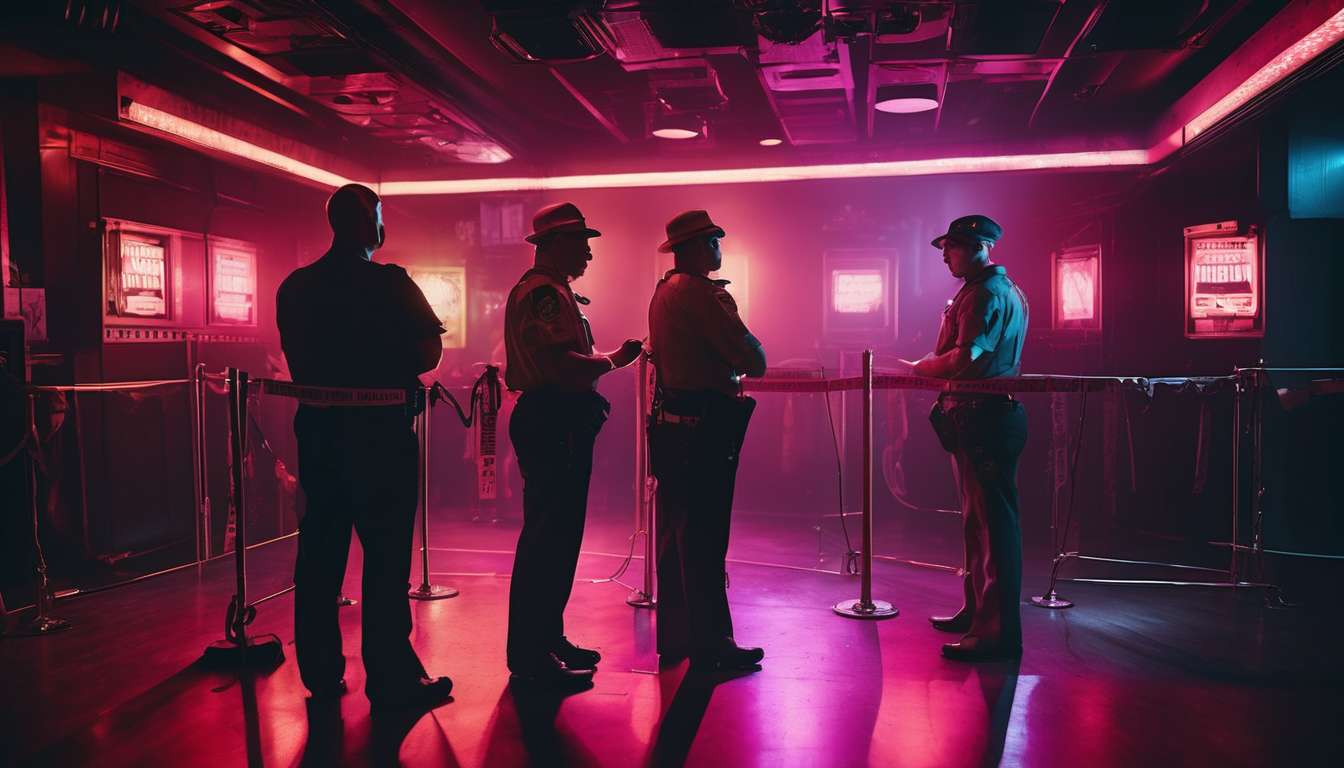
Right away, many of us assume exotic dance clubs are all glamour and risk-free thrills, but that misconception has obscured the urgent need for structured safety policies.
We once pictured stages lit for spectacle alone, not as workplaces demanding clear rules, training, and accountability.
As communities, we’re now confronting how myths about autonomy and informal arrangements have left performers vulnerable to harassment, inconsistent enforcement, and health hazards.
By unlearning the idea that safety measures dampen the art, we can recognize policies as tools that protect dignity, income, and creative expression.
Together we’re exploring how clarified boundaries, transparent reporting systems, and partnership with public health and labor advocates can transform venues into safer, more sustainable workplaces.
This shift reframes safety not as regulation imposed on performers but as a shared commitment that empowers dancers, managers, and patrons alike to uphold respect, reduce harm, and preserve the vibrant culture that drew us to the stage in the first place.
Rethinking Workplace Safety
We must center dancers’ lived experiences, not just regulatory checklists.
We commit to creating spaces where everyone feels seen, heard, and protected. This begins with acknowledging how policies affect daily routines like shift-flow, patron interactions, and the unpredictable moments offstage.
Design safety measures that reflect our realities.
- Involve attention to shift-flow, patron interactions, and offstage unpredictability.
- Translate those realities into usable, context-specific procedures rather than abstract rules.
Prioritize clear, accessible reporting protocols.
- Provide multiple reporting channels: anonymous, peer-supported, and managerial.
- Ensure protocols are easy to find and use, with information about timelines and what to expect after reporting.
Protect reporters from retaliation and shame.
- Make non-retaliation and confidentiality policies explicit and enforceable.
- Provide emotional and practical support (e.g., peer advocates, counseling referrals).
Ensure performer boundaries are respected through shared expectations and consistent enforcement.
- Draft clear, concrete boundary guidelines collaboratively with performers.
- Apply consistent enforcement mechanisms so boundaries are upheld, not left as vague suggestions.
Involve dancers in drafting, training, and incident reviews.
- Engage performers in creating procedures so policies are owned, not imposed.
- Include dancers in training design and delivery to keep content relevant.
- Include performers in incident reviews to learn from real situations.
Offer varied reporting options so people can choose what’s safest for them.
- Anonymous channels (hotline, form).
- Peer-supported options (trained peer advocates).
- Managerial routes (designated, trained supervisors).
Track outcomes and iterate based on real feedback.
- Monitor reports, responses, and resolution timelines.
- Evaluate whether measures actually improve safety and dignity.
- Celebrate improvements and address gaps promptly.
By centering lived experience, we build workplace safety that sustains dignity, belonging, and practical protection for every performer.
Defining Clear Boundaries
Set concrete, non‑negotiable boundaries so everyone knows what behavior to expect and enforce.
Define what’s allowed onstage and what’s off‑limits offstage.
- List permissible interactions onstage (e.g., scripted contact, consensual choreography, announced audience participation).
- Specify prohibited conduct in dressing areas (e.g., unwanted touching, photography without consent, harassment).
- Establish rules for private spaces (e.g., single‑occupancy rooms, staff access protocols).
Honor performer autonomy, personal space, and the right to refuse contact without stigma.
- Include provisions that allow performers to decline physical contact or certain interactions.
- Make clear that refusals will not affect casting, pay, or reputation.
Create a process for updating policies with performer input so everyone feels included.
- Solicit regular feedback from performers and staff.
- Publish revisions with explanations of changes and how feedback was incorporated.
Train staff to recognize violations quickly and to follow consistent reporting protocols that protect privacy and dignity.
- Provide scenario‑based training and clear steps for intervention.
- Ensure confidential reporting channels and defined timelines for responses.
Make policies visible, plain‑language, and accessible in multiple formats.
- Post summaries in common areas and dressing rooms.
- Provide full policy documents digitally and in print, and offer translations or accessible formats as needed.
Foster a supportive culture where saying no is backed by coworkers and management.
- Encourage bystander intervention and peer support.
- Reinforce that safety and respect are community responsibilities.
By defining these limits together, strengthen workplace safety and build a community where performers feel respected and heard.
Reporting and Accountability
We’ll establish clear, confidential reporting pathways and transparent accountability measures so incidents are addressed promptly and fairly.
We create reporting protocols that are simple, accessible, and protect privacy, so everyone feels safe coming forward.
We document complaints, track resolutions, and set timelines for responses to ensure follow-through without delay.
We commit to impartial investigations that respect performer boundaries and avoid victim-blaming.
We train managers and peers on how to receive reports compassionately and on procedural steps that preserve evidence and confidentiality.
We’ll share outcomes in a way that maintains trust and community safety while protecting individuals’ identities when appropriate.
We also set measurable accountability:
- Corrective actions.
- Restitution where fitting.
- Consequences for repeat violations.
We invite performer input into refining reporting protocols and review them regularly so they stay relevant to our evolving needs.
By centering transparency and mutual respect, we reinforce workplace safety and strengthen the sense of belonging that lets performers focus on their work with dignity.
Health and Hygiene Protocols
Health and hygiene protocols
We’ll maintain clear, practical health and hygiene protocols—covering handwashing, sanitization of shared spaces, and personal-care resources—so performers and staff can stay healthy and confident on the job.
Cleaning routines and supplies
We set straightforward routines for cleaning dressing rooms, poles, props, and seating between shifts.
- Supplies provided:
- Soap
- Hand sanitizer
- Disinfectant wipes
- First-aid kits
Checklists and responsibilities
We’ll post easy-to-follow checklists so everyone knows who’s responsible for each task, reinforcing workplace safety without finger-pointing.
Privacy and performer dignity
We respect performer boundaries by providing private areas for changing and storing personal items, protecting dignity while reducing contamination risks.
Illness disclosure and support
We encourage disclosure of contagious illness without fear by offering paid sick time and clear reporting protocols.
- Staff can report symptoms or unsafe conditions promptly.
- We’ll avoid punitive responses and instead support recovery and return-to-work checks.
Transparency and collective responsibility
By keeping expectations transparent, supplying necessary supplies, and honoring privacy, we build a safer, more inclusive environment where performers and staff trust one another and take collective responsibility for health.
Training and Professional Development
We will provide regular, practical training and development opportunities so performers and staff can enhance skills, stay current on safety practices, and advance professionally.
Hands-on workplace safety sessions will cover de-escalation, emergency response, and environment checks to ensure everyone feels confident and included.
Management and performer boundary training will teach clear communication around consent and how to set and respect limits in ways that build trust.
Step-by-step reporting protocols will be taught so incidents are documented promptly and handled consistently.
- Everyone will know who to contact.
- Confidentiality procedures will be explained and preserved.
- Documentation and follow-up steps will be standardized.
Mentorship and skill workshops will be offered to support practical career growth.
- Examples: stagecraft, fitness, and business skills.
- Mentorship pairs and group workshops will share knowledge across the community.
Feedback-driven curriculum updates will ensure training reflects lived experience.
- We will solicit regular feedback.
- Training will be adapted based on input.
- Refresher courses will be provided to keep standards current.
By investing in ongoing professional development we will strengthen community, reduce harm, and ensure every person at our venue knows they belong, are supported, and can thrive safely.
Collaboration with Advocates
Partnerships with local advocacy groups and support services
We’ll build formal partnerships with local advocacy groups and support services to ensure performers have access to expert resources, emergency assistance, and confidential counseling.
On-site support and education
We’ll coordinate regular on-site visits, share up-to-date materials about workplace safety, and invite advocates to co-lead workshops that reinforce performer boundaries and consent.
Trauma-informed reporting protocols
We’ll create clear, trauma-informed reporting protocols that prioritize confidentiality and timely response, so everyone knows how to seek help and what to expect.
Direct referral pathways
We’ll set up direct referral pathways to:
- legal aid,
- health care, and
- crisis counselors,making support feel immediate and reliable.
Advocate involvement in policy and feedback
We’ll involve advocates in policy reviews to keep our rules aligned with community needs and best practices.
We’ll also establish survivor-led feedback channels so policies evolve from lived experience, not just theory.
Cultural goals and ongoing commitment
Our aim is to cultivate a trusting environment where dancers feel they belong, can assert limits without fear, and can rely on a network that respects their autonomy.
Collaboration with advocates will be an ongoing commitment, not a one-time checkmark.
Enforcement and Consistency
To ensure rules protect everyone, we’ll enforce policies consistently, document every incident, and apply fair, transparent consequences without exception.
We build enforcement around clear workplace safety standards so every person knows expectations and feels seen.
We’ll train staff and performers on performer boundaries and de-escalation, and we’ll review shifts to confirm practices match policy.
We won’t let ambiguity erode trust.
- Our reporting protocols will be simple, confidential, and accessible.
- We’ll provide multiple channels and ensure prompt follow-up.
- We’ll log reports with dates, actions taken, and outcomes.
We’ll share aggregated, anonymous summaries so the community understands patterns and improvements.
Discipline will be proportional and applied uniformly, with appeal steps that respect dignity.
By committing to consistent enforcement, we create a reliable environment where performers can focus on their work and support one another.
Consistency isn’t punishment; it’s protection and belonging.
We measure success by:
- Fewer incidents.
- Higher trust in reporting protocols.
- Stronger adherence to performer boundaries across the venue.
Preserving Artistic Integrity
We will protect performers’ creative vision by ensuring policies support artistic choices, costume and music autonomy, and choreographic expression while keeping safety and consent nonnegotiable.
We center artistic integrity by crafting clear guidelines that uphold creative freedom within a framework of workplace safety.
We trust performers to shape their acts, and we set firm expectations about performer boundaries so everyone feels respected and included.
We will provide accessible reporting protocols for incidents that threaten comfort or consent, ensuring swift, fair responses.
We foster a culture where creative risk is encouraged without compromising safety.
- Dressing rooms, staging, and technical support will be managed to enable bold work while minimizing hazards.
- Technical and stage safety checks will be run consistently to reduce risk during innovative performances.
We commit to collaborative policy review, inviting performers to revise rules that affect costumes, music cues, and choreography.
- Performers will be consulted periodically through surveys, focus groups, or representation on policy committees.
- Policy changes will be communicated clearly and implemented with transition support.
By balancing autonomy with practical safeguards and transparent reporting protocols, we build a community where artists belong, evolve, and create confidently within a consistently safe workplace.
How do safety policies affect performers’ tax status and eligibility for benefits like unemployment or health insurance?
Question: How do safety policies shape performers’ tax status and access to benefits?
Answer: When clubs set strict schedules, enforce dress codes, or control pay, performers are more likely to be classified as employees, which can make them eligible for benefits such as unemployment insurance, workers’ compensation, and employer-sponsored health insurance.
Conversely, if performers retain autonomy—by setting their own hours, handling tips directly, and controlling their performance—they are often classified as independent contractors, which typically:
- Limits access to employer-provided benefits.
- Shifts tax responsibilities (income tax, self-employment tax) onto the performer.
- Reduces eligibility for unemployment and workers’ compensation.
Practical steps:
- Document the terms of engagement (schedules, pay arrangements, control over performance).
- Seek legal advice to clarify classification and protect rights.
Key point: Classification depends on the degree of control and independence; safety and workplace policies that increase employer control push classification toward employee status and greater benefit access.
What legal protections exist for exotic dancers who are classified as independent contractors versus employees, and how do safety policies interact with those classifications?
Employees vs. Independent Contractors — legal protections (high level)
Employees are generally entitled to wage-and-hour laws, anti-discrimination protections, workers’ compensation, and unemployment insurance. These protections mean employees can recover unpaid minimum wages/overtime, file discrimination claims, obtain medical/partial wage benefits for on-the-job injuries, and seek unemployment benefits when eligible.
Independent contractors typically do not receive those protections from the hiring business. Contractors are responsible for their own taxes, benefits, insurance, and liability; they must pursue remedies (if any) through contract claims or their own insurance rather than the club’s employee protections.
How safety policies and workplace control affect classification
Courts and agencies look at control and integration. If a club’s safety rules, scheduling, performance requirements, uniform/appearance mandates, and close supervision give the club substantial control over how, when, and where work is done, adjudicators are likelier to find employee status despite label or a contract calling someone a contractor.
Conversely, genuine independence (setting your own hours, controlling how performances are done, supplying your own tools/props, and bearing entrepreneurial risk) supports independent contractor status.
Practical role of safety policies and written agreements
Clear, reasonable safety policies serve two important purposes:
- They can protect dancers’ health and safety by setting standards for venue practices (security, lighting, incident reporting, slip/fall prevention, harassment response).
- They can cut both ways in classification disputes. If drafted and enforced in a way that demonstrates the club controls the work, those same policies can be used as evidence of employment. If policies are presented as voluntary best practices that do not dictate core performance conditions, they are less likely to indicate control.
Contracts and documentation to reduce risk
- Use written contracts that accurately reflect day-to-day practice. Mislabeling or boilerplate “independent contractor” language won’t prevail if facts show employee-like control.
- Specify who provides equipment, who pays expenses, and who sets schedules. These facts weigh heavily in classification analyses.
- Draft safety policies that focus on shared responsibilities (e.g., emergency procedures, reporting, venue security) rather than prescriptive control over performance style or content if the goal is to preserve independent-contractor status.
- Provide options for autonomy where appropriate (e.g., allowing dancers to choose songs or costumes) and document entrepreneurial elements (promotion, outside bookings).
- Maintain records of how work is actually performed, payments, and enforcement of policies — courts rely on reality over labels.
Bottom line
Employees receive far broader legal protections than independent contractors. Safety policies that imply significant operational control can push a tribunal toward employee classification; conversely, carefully drafted contracts and policies that preserve autonomy and document real independence help protect contractor arrangements while still promoting safety. If classification is contested, consult an employment lawyer to tailor contracts and safety programs to local law and to protect both rights and safety.
How are disputes between performers and management over policy enforcement typically mediated, and are third-party arbitrators or labor unions involved?
We handle disputes internally first.
We encourage managers and performers to negotiate solutions through meetings or written grievances before escalating.
If internal efforts fail, we escalate using formal procedures.
- We use club-established grievance procedures.
- We may engage mediators or third-party arbitrators when contracts allow.
Where unions exist, we involve union representatives.
- We bring in reps for collective bargaining.
- We use grievance arbitration as appropriate.
Our process principles.
- We prefer transparent, respectful processes that protect safety and rights.
- We document outcomes to prevent future conflicts.
Conclusion
You’ve seen how safety policies reshape exotic dancing workplaces: they set clear boundaries, create reporting paths, and prioritize health, training, and accountability.
By working with advocates and enforcing rules consistently, you’ll protect performers while preserving artistic integrity.
Embracing these measures doesn’t dilute expression — it strengthens it, giving you and your colleagues a safer, more professional environment where creativity and dignity thrive together.
Make safety part of your craft.