
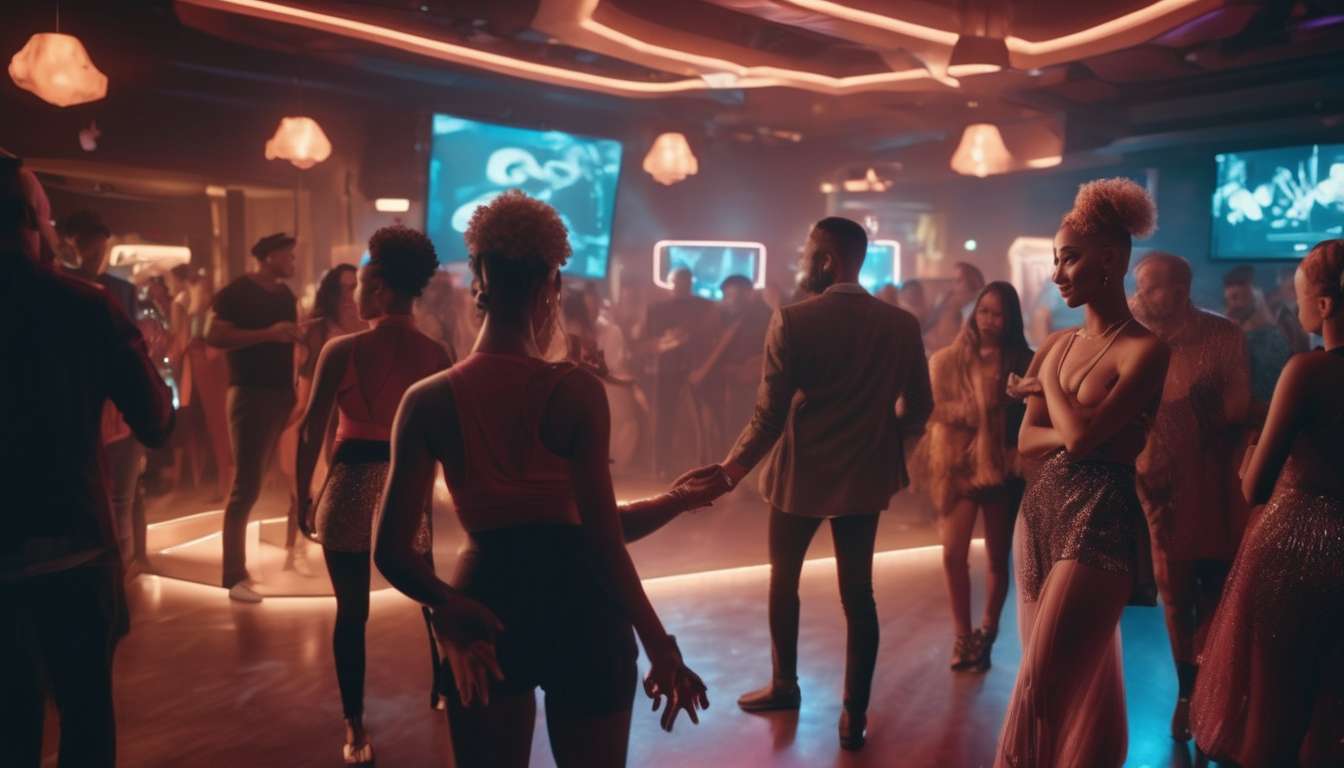
Comparison of past and present expectations
I compare the neon-lit rooms of the past with the app-driven platforms of today, and we notice more than a change in décor — we see an overhaul of expectations.
Past expectations
- Anonymity
- Fixed service models
- Clear separations between onstage performance and offstage life
Present expectations
- Transparency
- Personalized experiences
- Ethical practices woven into every interaction
Shifts in demand and operational responses
As demand shifts toward wellness, storytelling, and safety, venues and independent performers are adapting pricing, training, and engagement strategies to meet new norms.
How the landscape is changing
- Technology mediates intimacy — apps and platforms alter how performers and patrons connect.
- Economic pressures reshape schedules — financial realities change availability and business models.
- Cultural conversations influence behavior — consent, labor rights, and ethics affect patron expectations and choices.
The central challenge
This evolution forces us to ask which traditions to preserve and which to reimagine, and it challenges operators and performers alike to innovate without erasing the community and artistry that made the industry distinct.
Neon to Digital
We’ve watched neon-lit stages give way to LED screens and livestream platforms that let dancers reach audiences beyond the club.
We’ve embraced digital platforms as extensions of our rooms, where familiar faces and new performers meet regulars and newcomers who want to belong.
We’re intentional about building spaces that respect consent standards, setting clear boundaries for interactions and tipping, so everyone feels safe participating.
We curate personalized experiences through chat, private shows, and content bundles that let patrons connect on their terms while performers keep control.
We celebrate the ways online tools let us maintain community rituals—shout-outs, recurring nights, and shared codes—that translate club culture into pixels without losing warmth.
We know belonging grows when rules are transparent and participation is voluntary, so we model respectful behavior and amplify creators who prioritize consent.
We’re moving from neon spectacle to digital intimacy, crafting systems that honor both artistic expression and human dignity, and inviting people in who want to be part of something steady, respectful, and shared.
Anonymity vs. Transparency
We’ll balance the privacy performers need with the transparency patrons expect by setting clear rules about anonymity, profiles, and what data gets shared.
We’re committed to creating a welcoming community where everyone feels seen and safe, and that starts with thoughtful choices about identity.
On digital platforms we’ll let performers choose display names, control profile visibility, and set boundaries for interactions.
- Performers can select display names that protect real identities.
- Profile visibility settings will range from public to private.
- Interaction boundaries (messaging limits, blocking, time windows) will be configurable.
We’ll publish consent standards so patrons understand what’s permissible and performers can enforce limits without shame.
- Clear guidelines on acceptable requests and behaviors.
- Procedures for performers to document and enforce consent violations.
- Resources for patrons to learn about respectful engagement.
We’ll explain what data is collected, who can view it, and how long it’s retained, so trust grows inside the venue and online.
- Data collection categories and purposes will be listed plainly.
- Access rules will specify which staff, performers, and patrons can see each data type.
- Retention schedules will state how long different records are kept and when they’re deleted.
We’ll keep account controls simple, offering opt-ins for features that increase connection while preserving anonymity when desired.
- Default privacy-forward settings with clear opt-in toggles for visibility and features.
- Simple UI for changing display names, visibility, and interaction limits.
- Explanations of trade-offs for each opt-in feature.
We’ll monitor compliance, respond to breaches quickly, and refine policies with performer and patron input.
- Regular audits and monitoring for policy adherence.
- Rapid incident response and notification procedures.
- Ongoing policy review informed by community feedback.
By prioritizing clear rules over vague promises, we’ll foster belonging, protect dignity, and maintain the balance between personal privacy and the transparency that builds respectful relationships.
Personalized Service Models
We tailor service options to individual preferences and boundaries so performers can offer consistent, high-quality experiences that match what patrons want. We create spaces where guests feel seen and members feel supported, using digital platforms to let people indicate interests, limits, and booking preferences in advance. By standardizing consent standards across offerings, we protect performers and reassure patrons, making personalized experiences safe, respectful, and reliable.
We balance customization with clear expectations by using tiered service menus, opt-in add-ons, and profiles that highlight comfort levels and specialties.
- Tiered service menus clarify what’s included at each level.
- Opt-in add-ons let patrons request extras while keeping core boundaries intact.
- Performer profiles showcase specialties and stated comfort levels.
We use aggregated feedback to refine matches, ensuring repeat visitors find familiar warmth while newcomers feel welcomed.
- Collect anonymized ratings and comments to identify consistent strengths and issues.
- Surface patterns that help tailor recommendations and menu adjustments.
We reduce misunderstandings through staff training and transparent pricing. Platform tools let performers update availability and boundaries in real time, so expectations stay aligned.
- Regular staff training on consent, communication, and de-escalation.
- Clear, itemized pricing so patrons know what to expect.
- Real-time availability and boundary controls on performer dashboards.
Together, we build belonging through consistent, tailored interactions that respect autonomy and dignity. Personalized models aren’t about one-off indulgence; they’re about sustaining trust, creating community, and delivering experiences that honor everyone involved.
Wellness and Storytelling Trends
We’re seeing a growing emphasis on holistic performer wellness and narrative-driven offerings.
Key idea: Combine mental health support, physical care, and storytelling to deepen patron connection.
- Through digital platforms we extend care and story beyond the club:
- Curated playlists
- Serialized character arcs
- Wellness resources
- These elements create continuity that audiences follow and support.
We’re creating spaces where dancers and patrons feel seen and included.
Key idea: Use shared narratives to build belonging and a sense of community.
- Shared storytelling fosters identification and empathy.
- Inclusive programming ensures diverse patrons and performers feel represented.
We prioritize clear boundaries and mutual respect while crafting intimate arcs.
Key idea: Align programming with evolving consent standards without detailing safety procedures.
- Emphasize consent, dignity, and mutual care in creative interactions.
- Maintain professional boundaries alongside personalized experiences.
Our approach centers personalized experiences that honor both performer needs and fan loyalty.
Key idea: Tailor interactions, rituals, and follow-ups to create meaningful memories.
- Tailored interactions and memory-making rituals
- Follow-up touchpoints to reinforce care and appreciation
- Intentional pacing, emotional tone, and recovery time to sustain creative work
We integrate therapy-adjacent supports, coaching, and collaborative storytelling.
Key idea: Build resilient communities where performers and patrons co-create sustainable connections.
- Therapy-adjacent supports and coaching for performer resilience
- Collaborative storytelling that engages patrons constructively
- Outcomes: connections that feel safe, affirmed, and mutually rewarding
Safety and Consent Standards
We’ll establish clear, practical safety and consent standards that protect performers and patrons while enabling authentic, boundary-respecting interactions.
We believe everyone belongs in spaces where rules are visible, enforced, and easy to follow.
We create consent standards that are simple:
- Explicit verbal or digital agreement before any interaction.
- Ongoing check-ins during interactions.
- Clear opt-out signals that are widely understood and respected.
We pair these rules with transparent protocols for incident reporting, de-escalation, and aftercare, so no one feels isolated when boundaries are tested.
We embrace digital platforms as tools to document agreements, schedule check-ins, and offer anonymous feedback, reinforcing trust without replacing human connection.
We design training and peer-led workshops so performers and staff feel supported and competent enforcing standards.
We prioritize personalized experiences that respect expressed limits while honoring curiosity, ensuring intimacy is negotiated, not assumed.
By centering shared responsibility, measurable policies, and community-based enforcement, we foster environments where safety, consent, and belonging coexist.
Platform-Mediated Intimacy
We’ll use platform tools to mediate safe, clear, and negotiable intimacy.
Document agreements, schedule check-ins, and enable discreet opt-outs that keep human judgment central.
We design digital platforms to reinforce consent standards.
Make expectations visible and revisitable so everyone feels seen and secure.
We create shared spaces where performers and patrons co-author personalized experiences without pressure.
Use profiles and prompts that express limits, interests, and comfort levels.
We’ll prioritize community norms that normalize pausing or changing plans.
Embed gentle reminders and confirmation steps that honor boundaries.
We’ll train moderators and peers to intervene compassionately when consent signals are unclear.
Combine algorithmic support with human context.
We’ll celebrate belonging by giving members tools to match on values and communication style.
Make intimacy collaborative rather than transactional.
By centering clear consent standards and adaptable interfaces, we’ll build platforms that foster trust, dignity, and relationships that respect both safety and the desire to connect.
Economic and Scheduling Shifts
We will redesign pay structures and scheduling tools so performers can control earnings, set predictable hours, and adapt to fluctuating demand.
We will build transparent revenue splits and tipping systems on digital platforms that let everyone see who earns what and why, fostering trust and collective ownership.
We will standardize consent standards in scheduling—clear opt-ins for shifts, private bookings, and extra services—so boundaries are respected while income opportunities stay flexible.
We will offer shared calendars, shift-swapping features, and demand forecasts that help performers pick hours aligned with their lives, not just peak ticket times.
We will create group-based guarantees and pooled safety nets that smooth income during slow periods, reinforcing that none of us stands alone.
We will prioritize tools that enable personalized experiences for guests without forcing performers into unpredictable or unsafe patterns, ensuring autonomy over style, pace, and interactions.
By centering transparency, mutual support, and practical tech solutions, we will reshape economics and time so all performers feel secure, valued, and empowered to choose how they work.
Preserving Artistry and Community
We will protect artistic integrity and communal bonds by investing in training, curated creative spaces, and shared cultural practices that prioritize expression over commodification.
We build curricula that teach choreography, improvisation, and storytelling alongside business skills.
- These resources are available both in-house and via digital platforms so members who can’t attend in person still feel part of the collective.
We set clear consent standards and enforce them consistently.
- This creates a safe environment where creative risks won’t be punished.
We design physical and virtual spaces—stages, lounges, and online rooms—as welcoming sites for mentorship, critique, and celebration.
- Each performer is treated as an artist and neighbor.
We co-create personalized experiences that let performers express identity while meeting audience desires responsibly.
- This avoids one-size-fits-all pressure.
We institutionalize rituals—open jams, feedback circles, holiday showcases—that reinforce belonging and transmit culture.
We measure success by retention, mutual respect, and artistic growth rather than only revenue.
- Policies are continually adapted so community and craft stay central as service models evolve.
How are licensing, zoning, and local legal regulations evolving in response to new exotic dancing service models?
Municipalities are updating licensing categories to address new exotic dancing service models.
They are creating more specific license types and revising application requirements to capture a wider range of business models and service formats.
Licensing and conduct regulations are being tightened, often with added health and safety requirements.
- New conduct rules define prohibited behaviors and set boundaries for performer–customer interactions.
- Health-related requirements include sanitation standards, screening or vaccination policies in some areas, and protocols for incident reporting.
Zoning maps and land-use rules are being redrawn to limit locations while establishing special entertainment districts.
- Some municipalities restrict exotic-dancing venues from residential zones, schools, churches, and certain commercial corridors.
- Other cities create concentrated entertainment districts where such venues are permitted together, often with tailored operating-hour rules and permitting processes.
New safety and worker-protection provisions are increasingly included in local rules.
- Examples include mandatory panic buttons, security staffing minimums, lighting and camera standards, and anti-harassment or nonretaliation clauses.
- Some jurisdictions require that performers be able to work as independent contractors or employees with clear payment and tip-handling rules, and to access complaint and inspection processes.
Advocates and municipal staff are pushing for clearer definitions and consistent enforcement.
- Clear, consistent definitions reduce regulatory overlap and ambiguity for both businesses and enforcement agencies.
- Standardized enforcement practices aim to avoid selective targeting of venues or workers.
There is growing emphasis on including performers’ voices so regulations balance community standards with workers’ rights and dignity.
- Engagement practices include advisory boards with performer representation, public hearings targeted to workers, and impact assessments that consider livelihood and safety.
- Incorporating worker input can lead to regulations that protect public safety while preserving economic and personal autonomy for performers.
Overall trends to watch:
- Expanded and more granular licensing categories.
- Zoning that both restricts locations and concentrates venues into entertainment districts.
- Stronger conduct, health, and safety requirements.
- Increasing inclusion of worker-protection measures and performer participation in policymaking.
- Efforts to standardize definitions and enforcement to reduce arbitrary outcomes.
If you want, I can summarize model ordinances being adopted in specific cities, draft suggested language for balanced licensing/zoning rules, or create outreach templates to include performer voices in local processes. Which would be most helpful?
What environmental or sustainability practices (e.g., energy use, waste reduction, eco-friendly costumes) are venues adopting as consumer expectations shift?
Venues are adopting greener practices as consumer expectations shift.
Key facility upgrades include:
- Installing LED lighting and efficient HVAC systems.
- Reducing single-use plastics.
- Implementing composting for organic waste.
- Sourcing local, sustainable bar supplies.
Costume and material strategies focus on sustainability:
- Supporting eco-friendly costumes made from recycled or biodegradable materials.
- Encouraging rental or upcycling of costumes.
Operational measures for ongoing impact:
- Tracking energy and water use.
- Training staff on sustainability practices.
- Promoting transparent green policies so patrons feel included in the venue’s environmental commitment.
How do exotic dancers navigate tax, benefits, and worker classification changes as platforms and venues offer more varied employment/contract arrangements?
We’re navigating shifting tax, benefits, and classification rules by sharing resources, asking for clear contracts, and getting professional advice together.
We’re tracking income meticulously: requesting W-2s or 1099s when appropriate, and pushing venues to clarify worker status and offer benefits pools or tipping transparency.
We’re organizing cooperatives and support networks to negotiate fair terms, access group insurance, and educate newcomers so nobody faces surprises alone.
Conclusion
You’re witnessing a shift where tradition meets technology, and you’ll adapt alongside it.
You’ll value dancer autonomy, clearer consent, and safer spaces while embracing digital platforms that let you personalize experiences and support storytelling and wellness.
You’ll navigate new economic rhythms and scheduling models that respect creators’ time, and you’ll help preserve the artistry and community that gave this scene its soul.
Ultimately, you’ll expect ethical, transparent services that honor both performers and patrons.