
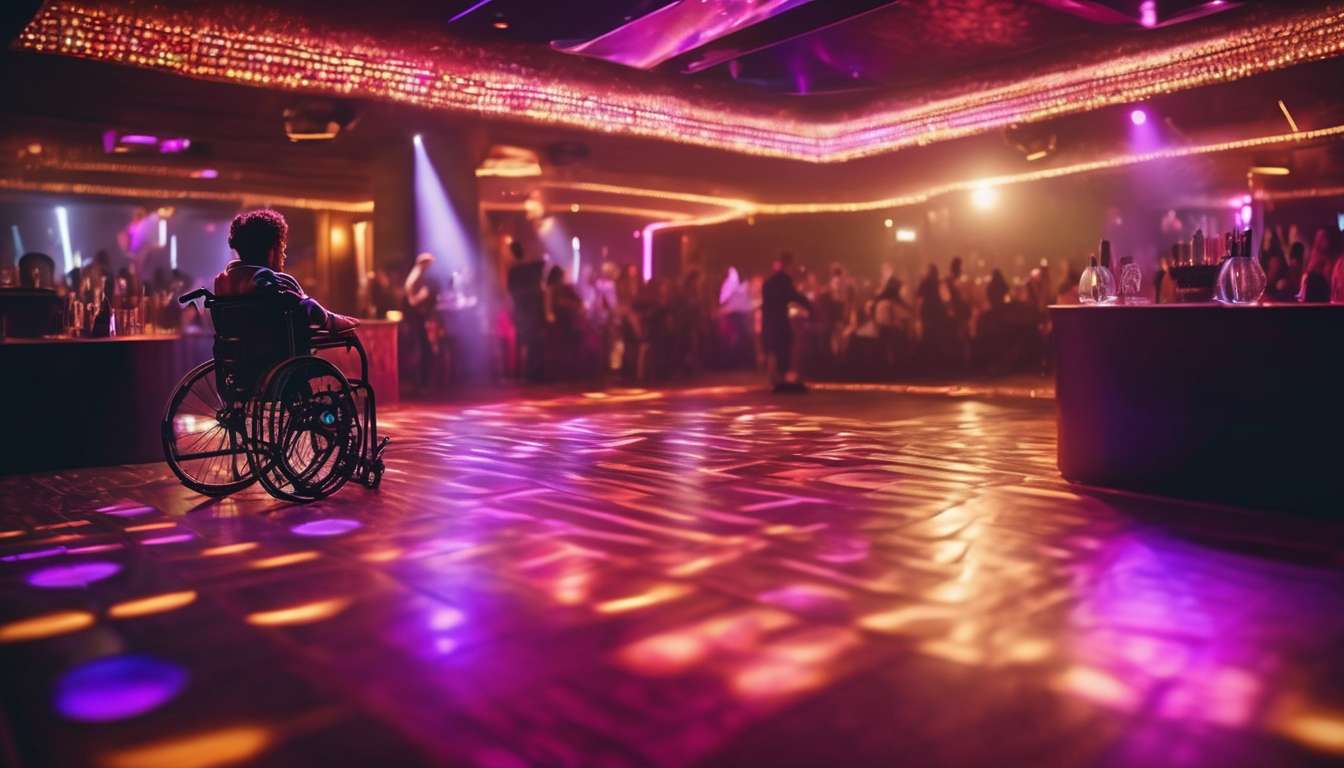
Equity is the stage light that finally reaches every corner of entertainment, and we are witnessing its glow spreading into exotic dancing spaces.
We have long valued these venues for their artistry, autonomy, and the communities they foster, yet accessibility was often an afterthought. Now, with purpose-driven design, policy shifts, and grassroots advocacy, we are reimagining clubs and performance areas so that patrons and workers with disabilities can fully participate.
We celebrate widened stages, tactile signage, flexible seating, and staff trained in inclusive customer service because these changes honor dignity and broaden audiences.
As we document these adaptations, we also examine tensions:
- Balancing performer safety with accessibility needs.
- Preserving club culture while implementing structural change.
- Ensuring modifications are implemented respectfully rather than tokenistically.
Our exploration highlights practical steps, success stories, and ongoing gaps, inviting venues, policymakers, and communities to collaborate so exotic dancing spaces become welcoming, safe, and vibrant for everyone.
Policy Shifts
Goal: Assess how local and state policy changes can reduce barriers and create consistent accessibility standards for exotic dancing venues.
Principle: Recognize venues as community spaces where everyone belongs.
Licensing and audits
- Mandate clear licensing rules that require regular accessibility audits.
- Encourage funding for inclusive design upgrades (ramps, seating, restrooms) without stigmatizing performers or patrons.
- Support grant programs that lower the cost of compliance for venue owners.
Performer-centered safety guidelines
- Center performer safety with standards for lighting, exits, privacy protocols, and anti-harassment enforcement.
- Ensure physical access features (ramps, seating configurations, wheelchair access) accommodate diverse bodies.
Collaborative standards development
- Collaborate with key stakeholders: dancers, disability advocates, venue owners, and regulators to craft practical, enforceable standards respectful of occupational needs.
- Make policy participatory so affected communities help shape requirements.
Training and staffing
- Promote training requirements so staff understand both accessibility principles and de-escalation techniques.
- Include anti-harassment and privacy training to protect performers and patrons.
Accountability and evaluation
- Track outcomes and publish transparent reports on compliance and impact.
- Iterate policies based on evidence of what proves effective.
Expected result: By making policy participatory and accountable—combining clear licensing, funding support, performer-centered safety, stakeholder collaboration, staff training, and ongoing evaluation—we will create consistent, durable accessibility improvements that strengthen community ties and protect those who work and gather in these spaces.
Venue Design Changes
We will redesign venue layouts to remove physical barriers, improve sightlines, and provide flexible seating and restroom options that work for patrons and performers with diverse needs.
Key layout features:
- Clear pathways and ramps to prioritize safe, direct circulation.
- Seating clusters that allow people to choose proximity without feeling isolated.
- Improved sightlines so audience members in different areas have unobstructed views.
We will consult community members to create inclusive designs that respect varied mobility, sensory, and social preferences so everyone feels welcome.
Community-centered design steps:
- Conduct participatory workshops with patrons and performers.
- Incorporate feedback into schematic and final designs.
- Pilot changes in select spaces and iterate based on user feedback.
We will install adjustable lighting and sound zones to prevent sensory overwhelm, and mark surfaces and thresholds for easier navigation.
Sensory and wayfinding measures:
- Adjustable lighting zones with dimming and color-temperature control.
- Separate sound zones or seating areas with acoustic treatments.
- Tactile markings and high-contrast thresholds to support navigation.
Restrooms and changing areas will be gender-inclusive and scalable for attendants or companions, supporting dignity and privacy.
Restroom and backstage accommodations:
- Gender-inclusive stalls with full-height doors and locks.
- Accessible changing rooms with space for attendants, benches, and transfer areas.
- Privacy screens and emergency call systems where appropriate.
Back-of-house modifications will ensure performer safety through non-slip flooring, adequate curtains, and safe equipment placement, reducing injury risk while honoring performers’ autonomy.
Performer safety measures:
- Non-slip flooring and clear circulation paths.
- Properly tensioned, flame-retardant curtains and safe rigging practices.
- Ergonomic and secure equipment placement to minimize lifting and trip hazards.
We will document changes transparently and train staff to maintain standards, reinforcing a culture where accessibility is seen as essential, not optional.
Implementation and maintenance:
- Publish accessible-design guidelines and modification logs.
- Provide staff training on accessibility practices and emergency procedures.
- Schedule regular audits and community feedback sessions.
Together, we will build venues that prioritize comfort, access, and belonging for all who enter.
Stage Accessibility
We will ensure stages are reachable, navigable, and adaptable so performers of all abilities can enter, exit, and perform with confidence.
Key accessibility upgrades:
- Install ramps with appropriate slopes.
- Widen access points.
- Provide sturdy, non-slip surfaces.
Outcome: These measures help everyone feel welcome and steady.
We will prioritize modular stage elements to accommodate different mobility needs and performance styles without singling anyone out.
Modular elements include:
- Portable lifts.
- Guardrails.
- Adjustable stage heights.
We will adopt inclusive design principles for technical systems so performers can operate or request adjustments easily.
Focus areas for inclusive design:
- Lighting controls.
- Curtain systems.
- Props and set pieces.
We will organize backstage layouts to reduce clutter and hazards and to support performer wellbeing.
Backstage priorities:
- Clear, unobstructed pathways.
- Secure storage.
- Dedicated rest areas.
Performer safety is central and will be maintained through routine practices and training.
Safety measures:
- Regular inspections.
- Staff training on assisted transfers.
- Emergency protocols designed with diverse bodies in mind.
We will consult performers directly and iterate on solutions to ensure practical, respectful outcomes.
Process commitments:
- Consult performers and crew for feedback.
- Implement technical upgrades and policy changes.
- Iterate based on real-world use and celebrate practical improvements.
Goal: By combining technical upgrades with respectful policies, we create stages where every performer can thrive.
Seating & Sightlines
We arrange seating and sightlines so every guest can see performances comfortably and safely, whether seated, using mobility aids, or standing.
We map sightlines to avoid blocked views by creating staggered seating, clear standing zones, and wheelchair-accessible platforms that integrate with the room rather than isolate patrons.
We prioritize accessibility through sightline audits and adjustable seating that lets people choose proximity without compromising others’ views.
We design layouts that respect intimacy while maintaining safe clearances around the stage for performer safety, and we mark pathways to keep routes unobstructed.
We offer varied seating heights and removable seats so groups and individuals can sit together, and we provide clear signage and staff-guided placements when needed.
We practice inclusive design that balances audience connection and privacy:
- Clear sightlines
- Good lighting
- Thoughtful spacing
These elements build a welcoming atmosphere where everyone feels seen and respected.
Staff Training Programs
We will train staff in clear, consistent practices so they can confidently support patrons with diverse needs.
Training will cover mobility and communication accommodations and appropriate responses to accessibility-related concerns.
We will create hands-on modules that teach practical skills.
- Modules will include accessible entryways, seating assistance, effective communication techniques, and adjustments tied to inclusive design.
- The goal is that everyone—staff, performers, and patrons—feels welcome.
We will use role-playing to build empathy and problem-solving skills.
- Scenarios will focus on quick, respectful responses and practicing language and behaviors that avoid assumptions.
- Training will include guidance on using assistive technology (e.g., hearing loops, mobility aids) and how to assist without assuming ability.
We will establish measurable standards and ongoing learning structures.
- Set measurable training standards and expectations.
- Require regular refresher sessions.
- Implement feedback loops so staff feel supported as they learn and grow.
We will emphasize privacy, consent, and boundaries in all training.
- Procedures will respect patron and performer privacy and avoid intruding on performer safety topics reserved for other protocols.
- Coordination with performers and managers will align accessibility procedures with existing safety practices.
We will involve community members and disability advocates in design and evaluation.
- Co-design sessions with community stakeholders will ensure training reflects lived experience.
- Their participation reinforces that accessibility is essential to our culture—not optional.
By committing to clear expectations and ongoing education, we will create a venue where both staff and patrons belong and thrive.
Performer Safety Measures
We will implement clear, practical measures to protect performers’ physical safety, privacy, and agency while ensuring accommodations don’t compromise their boundaries.
Center accessibility and inclusive design in safety planning.
Assess the physical environment so performers with mobility differences can navigate confidently.
- Evaluate lighting, flooring, and stage edges for visibility and trip hazards.
- Ensure ramps, handrails, and clear pathways are available and well-marked.
- Provide stage edge markers and non-slip surfaces where needed.
Create confidential, accountable reporting and response systems.
- Set up confidential reporting channels for concerns or incidents.
- Track incidents and share aggregated data transparently to identify patterns.
- Iterate on procedures based on data and feedback to close gaps.
Enforce consent-based interaction rules and train staff to respond appropriately.
- Implement clear, consent-based guidelines for interactions with performers.
- Train security and frontline staff to respond without judgment and to respect limits.
- Involve staff in de-escalation and trauma-informed response training.
Provide private spaces and secure storage for personal and assistive items.
- Offer private changing areas and quiet rooms for breaks or sensory regulation.
- Provide secure storage for assistive devices and personal belongings.
- Ensure these spaces are accessible, lockable, and respect privacy needs.
Offer sensory adjustments and schedule practices that reduce fatigue and strain.
- Provide sensory adjustment options (e.g., low-sensory shifts, break signals, quiet zones).
- Ensure schedules and rotation practices reduce prolonged standing, repetitive strain, and fatigue.
- Supply ergonomically supportive equipment (seating, mats, lift-assist tools) where needed.
Involve performers in designing and reviewing protocols so measures reflect lived experience.
- Co-create policies with performers and include their feedback in revisions.
- Ensure measures respect personal agency and choice rather than imposing one-size-fits-all solutions.
Balance visibility and protection so performers feel valued, heard, and safe.
- Prioritize safety as core to accessible, inclusive design that sustains the community.
- Treat performer safety as non-negotiable and integral to organizational values and practice.
Community-Led Innovations
We will prioritize community-led innovations that let performers and staff design, test, and refine accessibility solutions grounded in their lived experience.
We gather diverse voices—dancers, bartenders, technicians, patrons with disabilities—and co-create practical changes such as:
- Adjustable stage heights
- Tactile signage
- Quiet rooms
We prototype with performers on shift, collect rapid feedback, and iterate until features truly support movement, communication, and performer safety.
We center inclusive design principles so adaptations feel natural, not additive, fostering a sense of belonging for everyone who works and visits.
We share toolkits, floor plans, and policy templates across venues so successful solutions scale without losing local nuance.
We train staff jointly with performers to maintain standards and respect boundaries, and we document lessons so new teams can adopt proven practices quickly.
By keeping innovation local, participatory, and data-informed, we build venues that honor expertise from lived experience and ensure accessibility improvements are sustainable, respectful, and responsive.
Remaining Barriers
Practical, financial, and cultural barriers remain.
Despite progress, many venues still cannot fully implement changes performers and staff have identified. Accessibility isn’t just a checklist; it requires investment in ramps, lighting, sound, and staff training. Smaller clubs often can’t afford renovations or the downtime those renovations require, and grant programs rarely prioritize exotic dancing spaces.
Cultural resistance slows adoption.
Some managers fear changes will alter venue aesthetics or alienate regulars, and performers worry about tokenism when adjustments aren’t meaningful. Inclusive design must be rooted in consultation, not assumptions, so we push for participatory planning that centers dancers’ voices.
Performer safety and legal protections are essential.
Without stable funding and clear legal protections, venues hesitate to adopt policies like visible incident reporting systems or accessible green rooms. Performer safety remains a core concern and depends on both resources and policy.
Our advocacy priorities.
- Promote targeted funding and grant programs that explicitly include exotic dancing spaces.
- Support shared resources and pooled services for smaller venues (e.g., portable ramps, shared accessibility audits).
- Advance policy shifts and legal protections that encourage venue adoption of safety and accessibility measures.
- Center participatory planning so dancers’ voices guide meaningful changes.
We will continue advocating for these measures so every performer and patron can belong and work in safer, more accessible spaces.
How have accessibility improvements affected ticket prices or the cost of attending performances?
We’ve seen mixed effects on ticket prices and attendance costs.
Venues often invest in ramps, seating, and staff training, and we sometimes pass modest fees to cover upgrades. Other times grants or fundraising absorb costs, keeping prices steady.
We’re finding that clearer pricing, discounted accessible seating, and sliding-scale options help more people join us.
Overall, accessibility tends to broaden our audience without dramatically raising baseline ticket costs.
Are there guidelines for how to disclose accessibility features in event listings or promotional materials?
Goal: Make accessibility features clear in listings and promotional materials so everyone feels welcome.
Key accessibility features to list:
- Ramps (location, slope/grade if relevant, whether they are permanent or temporary)
- Seating (accessible seating locations, companion seating availability, reserved areas)
- Restrooms (accessible restroom locations, family/accessible stalls, changing tables)
- ASL interpretation (which sessions or performances have interpreters, how to request)
- Sensory rooms / quiet spaces (location, hours of availability, whether supervision is provided)
Be transparent about limitations and conditions:
- Clearly state any limitations (e.g., temporary construction, steep ramps, limited number of accessible seats, no elevator access to certain areas).
- Note conditions that attendees should know (e.g., gravel paths, uneven terrain, distance from parking).
Provide contact information for questions and accommodation requests:
- List a clear point of contact: name, role, phone number, email and expected response time.
- Explain how to request accommodations (advance notice required, last-minute options, on-site assistance).
Use clear symbols and plain-language descriptions:
- Pair simple icons (wheelchair, ear for ASL/CART, sensory-friendly, restroom) with plain-language text so meanings are unmistakable.
- Avoid jargon; write short, specific descriptions (e.g., “Ramp access via south entrance; slope 1:12” rather than “accessible entrance available”).
Keep information consistent and up to date across platforms:
- Use the same wording and features list on the website, ticketing pages, event listings, social media, and printed materials.
- Update materials promptly when accessibility features change (e.g., construction, staff availability, equipment outages).
Invite feedback and provide improvement channels:
- Encourage attendees to share feedback on accessibility before, during, and after events.
- Provide a simple feedback method (form link, email, phone) and commit to reviewing and responding.
Outcome: Foster belonging for all attendees
- Consistent, transparent, and actionable accessibility information helps people plan, reduces barriers, and signals that your organization values inclusion.
What legal protections exist for patrons or performers who request accommodations at exotic dancing venues?
Short answer: Federal disability law — principally the Americans with Disabilities Act (ADA) — can protect patrons who request accommodations at exotic dancing venues, and in some circumstances can affect performers’ working conditions. Other protections may come from state and local anti‑discrimination statutes, labor and contract law, and privacy statutes. Documenting requests and seeking local legal or advocacy help is important.
Federal disability law (ADA)
– Title III of the ADA protects access for patrons with disabilities. Public accommodations (which often include entertainment venues) generally must provide reasonable modifications and auxiliary aids/services so people with disabilities can access goods and services unless doing so would fundamentally alter the nature of the service or impose an undue burden.
– Reasonable modifications can include: changes to policies or practices, removal of barriers where feasible, providing accessible seating, or allowing aids or support animals. The exact obligations depend on whether the venue is a “place of public accommodation” under the statute and on the nature of the request.
– ADA effects for performers are limited but possible. Independent contractors or employees who are themselves people with disabilities may have protections under the ADA (Title I for employment) or state disability employment laws. A performer’s request for accommodations related to work tasks may trigger employer obligations if the venue is an employer under applicable law.
State and local anti‑discrimination and accessibility laws
– Many states and municipalities have laws that mirror or go beyond the ADA. These can provide broader coverage, lower thresholds for compliance, or additional remedies for patrons and employees.
– Local ordinances may require licensing or set venue‑specific accessibility rules. Licensing bodies sometimes impose conditions that affect how accommodations are handled.
Labor and contract rights
– Employment law can protect performers who are employees. Employers generally must engage in an interactive process and provide reasonable accommodations for qualified employees with disabilities, absent undue hardship.
– Independent contractor status changes the legal landscape. Many exotic dancers are classified as independent contractors; that status can limit workplace protections under employment law but does not eliminate statutory protections that apply regardless of classification (e.g., some state anti‑discrimination laws).
– Contract and lease rights may help. Agreements between performers and venues, or between venues and customers, can create enforceable rights or obligations about modifications, safety, or privacy.
Privacy and related protections
– Privacy laws and policies can be relevant. Requests for accommodations that implicate modesty, changing space, or non‑public areas may intersect with privacy rights and venue policies. If a request raises sexual harassment or safety concerns, other criminal or civil protections may apply.
Practical steps to take
1. Document the request.
Keep written records (emails, texts, dated notes) describing the accommodation requested and the venue’s response.
2. Ask for the specific reason or denial in writing.
If a request is refused, ask the venue to state the reason and whether any alternative accommodations are available.
3. Know local resources.
Contact local disability rights organizations, legal aid, or municipal human rights/ADA coordinators for guidance and possible advocacy.
4. Consider multiple legal routes.
Depending on the facts, remedies may be available under the ADA, state/local anti‑discrimination laws, employment law, contract law, or privacy/harassment statutes.
When to consult an attorney or advocate
– If the venue refuses reasonable modifications without a clear legal basis.
– If a performer’s employment or contracting status affects their ability to get accommodations at work.
– If a request triggers safety, harassment, or criminal concerns that require immediate intervention.
Bottom line: Patrons generally have protections under the ADA and similar laws to request accommodations at entertainment venues, and performers may have protection under employment or disability laws depending on their status. Document requests, seek local legal or advocacy help, and pursue remedies tailored to the specific facts.
Conclusion
You’ve seen how policy shifts, venue redesigns, and staff training are making exotic dancing spaces more accessible and safer for performers and audiences.
By improving stage access, seating sightlines, and emergency procedures, venues are welcoming a broader community while protecting people at work.
Community-led innovations keep solutions grounded in real needs, though some barriers remain.
Stay engaged, push for inclusive practices, and support ongoing change so accessibility keeps advancing across the industry.