
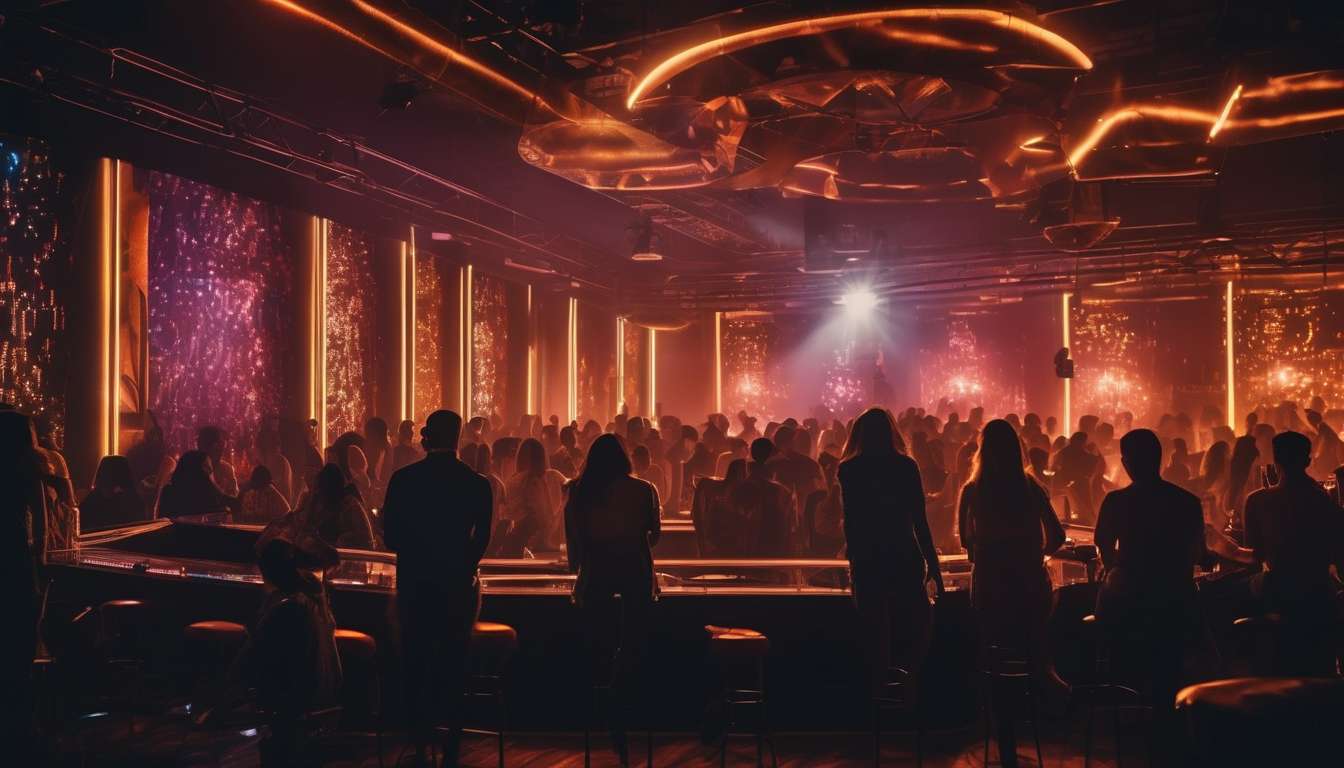
People who dismiss exotic dance as merely titillating entertainment misunderstand the complex social dynamics that drive attendance.
We argue that audience research reveals patterns shaped by identity, community, and cultural negotiation rather than simple vice or voyeurism.
By treating patrons as intentional actors—navigating desire, status, and belonging—we uncover why certain venues thrive while others falter, how demographic shifts alter peak nights, and why themed events can reconfigure local norms.
Our team synthesizes surveys, ethnography, and ticketing analytics to show that attendance trends reflect broader changes in labor markets, nightlife economies, and gendered expectations.
Rather than moralizing or sensationalizing, we map the motivations and constraints that produce measurable visitation patterns.
This perspective reframes exotic dance attendance as a lens for understanding urban consumption, performative labor, and social signaling.
We aim to replace caricature with evidence, offering policymakers, venue operators, and researchers actionable insights rooted in rigorous audience study.
Research Motivation
We wanted to understand why attendance at exotic dance venues has changed and what drives different audience segments to go (or stop going).
Our aim is to map how shifts in nightlife economies affect people who seek connection, escape, or entertainment in these spaces.
We focus on audience segmentation to acknowledge that patrons aren’t a monolith.
- Some come for social belonging.
- Others come for spectacle.
- Others follow ritualized routines tied to local economies.
We are motivated to uncover attendance motivations so operators, performers, and community members can make informed choices that foster inclusion and safety.
We are committed to listening to diverse voices who frequent—or have left—these venues, respecting their reasons without judgment.
By centering belonging, we aim to translate findings into practical insights that strengthen community ties within nightlife economies and ensure venues remain responsive to changing needs and values.
Methodological Approach
We combined qualitative interviews, participant observation, and targeted surveys to capture who attends, why they attend, and how patterns have changed over time.
We chose methods that honored participants’ stories and linked individual motives to broader nightlife economies.
Sampling and segmentation.
- We used purposive sampling to reach regulars, occasional visitors, staff, and promoters.
- We then applied audience segmentation to identify shared orientations and situational roles rather than fixed labels.
Observations and timing.
- Our observations occurred across diverse venues and time slots so we could trace rhythms of attendance and contextual triggers.
Interview and survey content.
- Interview protocols probed attendance motivation, social ties, and senses of belonging.
- Surveys quantified patterns we’d seen in the field.
Triangulation.
- We triangulated data, comparing narratives with observed behaviors and aggregated responses to test consistency.
Ethical reflexivity and community engagement.
- We protected anonymity, sought consent, and returned findings to community partners for validation.
Outcome.
- This approach let us map how interpersonal motives intersect with structural forces shaping attendance, while nurturing inclusive collaboration with those whose lives inform the research.
Demographic Patterns
Across venues and time slots we found distinct demographic clusters—defined by age, gender presentation, socioeconomic status, and relationship status—that consistently shaped patterns of attendance.
Audience segmentation emerged clearly:
- Younger patrons often attend in groups seeking social connection.
- Middle-aged attendees tend to come alone or with partners for routine leisure.
- Older visitors prioritize comfort and familiarity.
Gender presentation influenced engagement and feelings of welcome; inclusive settings drew more diverse mixes.
Socioeconomic markers correlated with frequency and spending.
Relationship status affected visit purpose: celebratory, solitary, or couple-centered.
We are careful not to reduce people to labels. Motivations overlap and evolve; our descriptions aim to help venues and researchers foster welcoming experiences.
By mapping who comes, when, and why, we can better nurture communal belonging and safety.
Our demographic patterns offer a foundation for responsive, respectful practice that honors varied identities and shared desires to belong.
Nightlife Economies
We view nightlife economies as interconnected systems. Pricing strategies, cover charges, drink minimums, and tip cultures all signal who’s welcome and what experiences are prioritized. These signals shape who comes, when they come, and how clubs and performers earn a living.
Use audience segmentation to match offerings to patron types.
- Map patrons by spending capacity, visit frequency, and attendance motivation.
- Adapt programming, pricing, and promotions to those segments so offerings fit demand.
Tier services to increase per-visitor revenue while preserving broader access.
- VIP areas, private dances, and bottle service create pathways for deeper engagement and higher spend.
- Maintain lower-cost entry options to keep the venue accessible to community members who prioritize connection over high spend.
Leverage ancillary services to reduce barriers and extend stays.
- Food, themed nights, special events, and transportation partnerships make entry easier and encourage longer visits.
- These services reinforce regular attendance patterns and broaden appeal.
Match staffing and promotions to temporal patterns.
- Monitor peak windows and slow nights to align promotions, staffing levels, and programming.
- Making the space feel reliable and welcoming supports repeat visits and fair performer schedules.
Deliberate choices sustain incomes and inclusivity.
- Thoughtful pricing, tiering, and ancillary offerings help sustain performers’ incomes and the venue’s resilience.
- Balancing revenue optimization with access fosters a sense of belonging among varied patrons without excluding those who seek connection rather than high spend.
Identity and Attendance
Our identities — including gender, sexuality, class, race, and age — shape why we go to exotic dance venues and how comfortable we feel once we’re there.
We see audience segmentation not as exclusion but as a tool that helps us understand shared needs and create welcoming spaces.
When we map who comes and why, attendance motivation becomes clearer:
- Some seek social connection.
- Others want affirmation.
- Still others pursue curiosity or celebration.
These varied motives interact with nightlife economies that set price points, dress codes, and music, which in turn influence who feels welcome.
We can use this knowledge to advocate for policies and practices that reduce barriers:
- Sliding-scale cover charges.
- Visible consent norms.
- Staff training on cultural sensitivity.
Emphasizing mutual respect and transparency helps attendees relax and return.
By centering identity in our analysis, we promote inclusive strategies that acknowledge economic realities while prioritizing belonging and safety for diverse patrons.
Event Design Effects
Many design choices — from lighting and seating to programming and entry flow — shape comfort, dwell time, and encouraged behaviors inside a venue.
We analyze how subtle shifts in layout and schedule communicate belonging and invite repeat visits.
By aligning lighting, sightlines, and lounge clusters with clear audience segmentation, we create spaces that welcome different groups without excluding others.
We calibrate programming and pacing to match attendance motivation so people find what drew them in and stay longer.
- Socializing: relaxed pacing, conversational seating, softer lighting.
- Celebrating: energetic programming, flexible circulation, focal lighting.
- Performance spectacle: clear sightlines, tiered seating, scheduled peaks.
Thoughtful entry flow and signage reduce friction and anxiety, reinforcing safety and a sense of membership.
Pricing cues, reserved areas, and staff presence signal values and norms that help communities form within nightlife economies.
When we design with intention, venues become predictable, warm, and purposeful.
That predictability cultivates repeat visits and stronger social ties, benefiting performers, staff, and patrons alike.
Policy and Practice
Policy priorities: clear safety standards, equitable labor rules, and community-informed regulations.
We prioritize safety, fair labor, and community input to keep venues vibrant and accountable.
By aligning policy with real motivations for attending and working in nightlife spaces, we create environments where belonging and accountability coexist.
Tailored interventions using audience segmentation.
- We draw on audience segmentation to tailor interventions that respect diverse patrons and workers.
- Policies should acknowledge different attendance motivations and aim to reduce stigma.
- Tailored approaches help avoid one-size-fits-all rules that can harm marginalized groups.
Standardized workplace protections with room for venue-level creativity.
- Standardize transparent pay, accessible complaint processes, and routine safety training.
- Maintain flexibility so venues can use creative approaches that sustain nightlife economies.
- Ensure protections are enforceable and consistently applied across venues.
Collaborative, participatory governance.
- Regulators, performers, managers, and neighborhood groups co-design guidelines so everyone feels seen and heard.
- Implement routine, participatory review of licensing conditions.
- Allow flexible hours that balance local needs with venue operations.
Harm-reduction and non-criminalizing enforcement.
- Adopt harm-reduction measures informed by lived experience.
- Support data-driven enforcement that discourages exploitative practices without criminalizing consensual work.
- Fund outreach programs that build trust between venues and communities.
Outcome: safer, more inclusive nightlife economies.
We aim for nightlife spaces that are safe, equitable, and community-aligned, where accountability is enforced and creativity is supported.
Future Research Directions
Priority: longitudinal, mixed-methods studies.
We should prioritize longitudinal, mixed-methods studies that explore how changing policy, technology, and social norms shape who attends exotic dance venues and why.
Approach: cohort tracking and local context.
We’ll track cohorts over time to capture evolving attendance motivation and intersect that with local nightlife economies.
Methods: combine quantitative and qualitative.
By combining:
- surveys,
- interviews,
- venue observation,
we can refine audience segmentation beyond demographic labels to include values, routines, and digital behaviors.
Participatory research to build trust.
We’ll center participatory methods so community members — patrons, workers, managers — help shape questions and interpret findings, which builds trust and belonging.
Examine mediating forces.
We’ll examine how:
- platform-mediated promotion,
- shifts in licensing,
- nightlife planning,
influence where people gather and how they find meaning in attendance.
Comparative, multi-city work.
Comparative work across cities will reveal structural patterns and local particularities, informing equitable policy and business practice.
Outcomes: actionable insights.
Ultimately, we want actionable insights:
- clear audience segmentation frameworks,
- measures of attendance motivation,
- recommendations that support inclusive nightlife economies where everyone feels seen and respected.
How do exotic dancers themselves describe what keeps them coming back to perform at specific venues?
Supportive management, dependable pay, and respectful coworkers make us feel valued and safe.
We stay where the crowd’s energy is strong, where promoters promote fairly, and where schedules fit our lives.
We’re loyal when policies are consistent, tips are protected, and we can bring our whole selves without judgment, so we feel belonging and pride in our work.
What are the emotional and mental health impacts of regular exotic dancing for performers, and how are these addressed by clubs or support organizations?
Topic: How regular exotic dancing affects performers’ emotional and mental health and what supports exist.
Emotional and mental-health impacts
Pride and affirmation. Many performers report feeling proud, confident, and affirmed by their work — a source of self-expression, skill, and financial independence.
Stress and burnout. Regular performance, long or irregular hours, and emotional labor can lead to chronic stress and burnout.
Anxiety and depression. Ongoing workplace pressures, stigma, and financial uncertainty can contribute to anxiety and depressive symptoms.
Stigma and trauma. Performers may face social stigma, discrimination, or boundary violations that can produce or exacerbate trauma-related distress.
Sense of belonging and isolation. Some dancers find strong community and belonging within their venues; others feel isolated, especially when support is inconsistent.
Existing supports
Club-level supports.
- Peer networks. Informal peer support among performers for emotional debriefing and practical advice.
- Counseling referrals. Some clubs provide referrals to mental-health professionals or employee assistance programs.
- Safer-work policies. Rules and protocols intended to reduce harassment, violence, and exploitative practices.
- Rest and recovery spaces. Designated areas for breaks and decompression between shifts.
Community and external supports.
- Community groups. Grassroots or nonprofit groups offering peer support, advocacy, and resource navigation.
- Mental-health resources. Clinics or counselors familiar with sex-worker- or performer-specific issues.
- Advocacy organizations. Groups that push for legal protections, workplace standards, and anti-stigma campaigns.
Gaps and desired supports
Trauma-informed care. Greater availability of trauma-informed mental-health services that understand the context of exotic dance.
Accessible counseling. Low-cost, confidential counseling options with clinicians who are nonjudgmental and experienced with performer issues.
Consistent workplace protections. Standardized, enforced policies across venues to protect safety, boundaries, and workers’ rights.
Bolstering wellbeing and belonging
- Increase funding and access to culturally competent, trauma-informed mental-health services.
- Strengthen and standardize workplace policies (safety, breaks, anti-harassment) across venues.
- Support peer-led programs and community organizations that provide mutual aid, advocacy, and social connection.
- Provide outreach and education to reduce stigma and improve public and provider understanding of performers’ experiences.
If you’d like, I can draft a short survey to assess performers’ mental-health needs, or a template workplace safety policy tailored for clubs. Which would be most helpful?
How do customers’ motivations and expectations differ across types of venues (e.g., high-end clubs vs. neighborhood bars), and how does that influence attendance patterns?
Customers’ motivations and expectations shift by venue.
In high-end clubs we expect status, spectacle, and curated privacy. Patrons return for exclusivity and higher spending.
In neighborhood bars we expect familiarity, casual socializing, and lower cost. Patrons come more frequently and stay longer.
We will tailor atmosphere, service, and pricing to match those needs.
- Create a sense of belonging and predictability that supports performers and community.
- Align offerings so attendance patterns become reliable for revenue and programming.
Conclusion
You’ve seen how audience research clarifies why exotic dancing attendance shifts across demographics, venues, and designs.
You’ll recognize that nightlife economies and identities shape who shows up and why, and that thoughtful event design can influence inclusion and behavior.
Use these findings to guide policy and practice—balancing safety, economic viability, and respect for performers.
You’ll also see clear paths for future research to refine interventions and deepen understanding of this complex social phenomenon.